

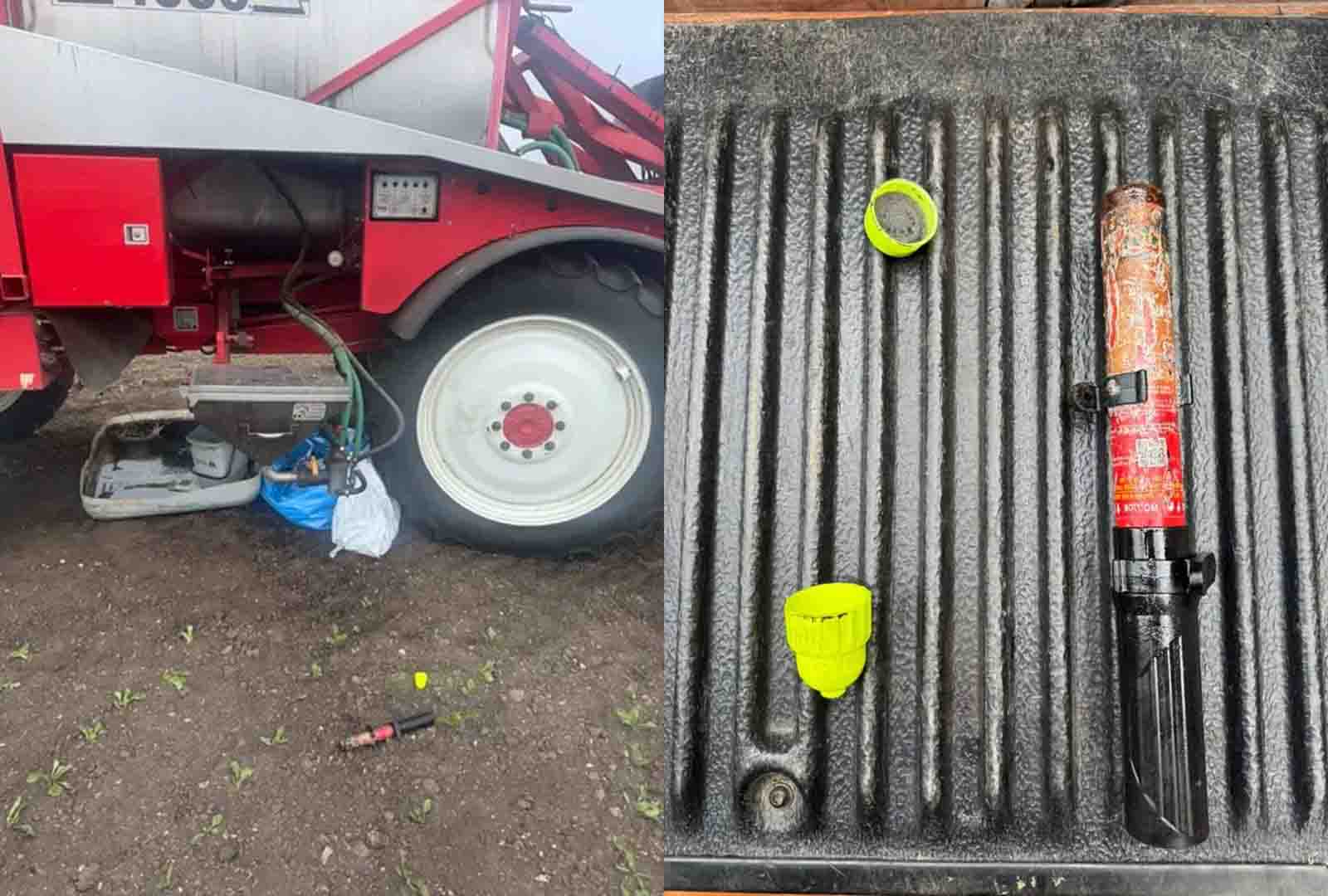
Modern Farming, Modern Fire Risks
Agricultural machinery represents one of the largest investments on any farm. Today’s combines, tractors, sprayers and balers are packed with hydraulic systems, electrical wiring, sensors and high-temperature components, all operating in dusty environments where a small fault can quickly become a devastating fire.
Unfortunately, machinery fires remain an all too common occurrence across UK agriculture. Every year, farmers lose valuable equipment during harvest and spraying seasons, often resulting in significant financial loss, costly downtime and increased insurance premiums.
When a fire starts in the field, immediate action can be the difference between replacing a hose… or replacing an entire machine.
That’s exactly what happened to Norfolk farmer Tim Payne.
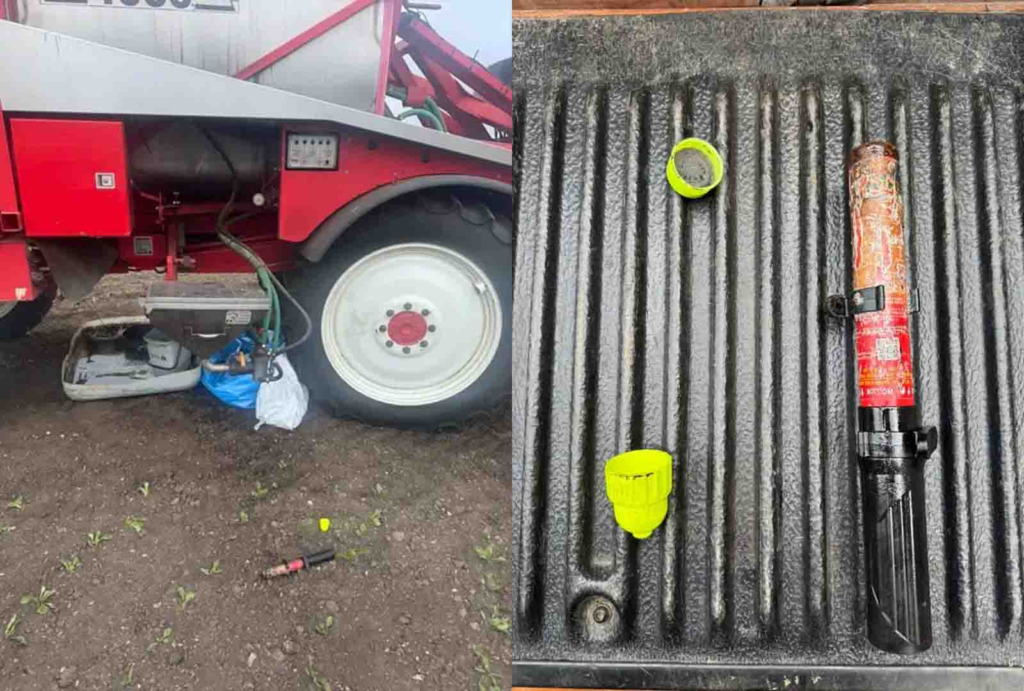
A Fire Nobody Expected
Tim had been spraying as normal when he reversed into a corner and glanced into his wing mirror.
“I thought I saw smoke. Sprayers aren’t renowned for catching fire.”
Moments later, smoke became flames.
Fire was billowing from underneath the middle of the sprayer near the chemical fill point before the machine’s engine management system began sounding alarms.
Without hesitation, Tim shut the machine down and reached for the Fire Safety Stick.
Fortunately, he’d already taken the time to watch the Fire Safety Stick demonstration videos.
“I was fairly comfortable with knowing how to get it going and what it was going to do.”
That preparation would prove invaluable.
More Than Just a Fire
Initially, the Fire Safety Stick quickly knocked down the visible flames.
However, the fire wasn’t over.
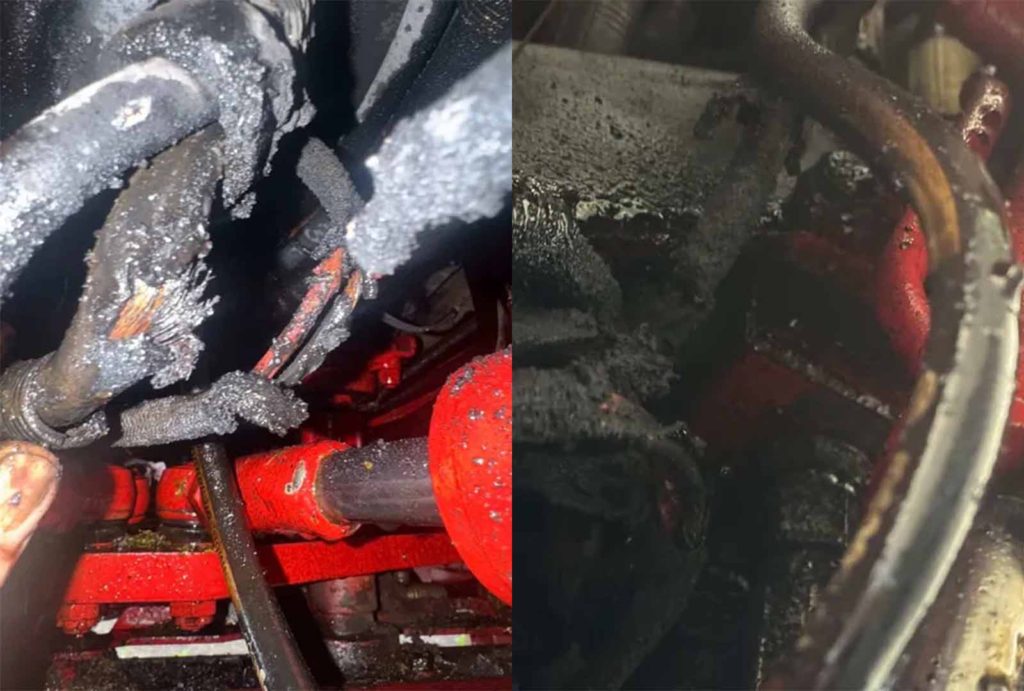
The cause was an oil pipe that had rubbed against a steel braided electrical cable. The damaged cable was arcing continuously while leaking oil repeatedly ignited, causing the fire to keep coming back.
This wasn’t simply a case of extinguishing one flame.
It required continuous suppression while identifying and stopping the source of ignition.
Why the Fire Safety Stick Made the Difference
Unlike conventional extinguishers that discharge in just a few seconds, the Fire Safety Stick continued producing extinguishing vapour long enough for Tim to remain in control of the situation.
Its compact size also allowed him to work underneath the sprayer where access was extremely limited.
Whatever it was, it just put the flames out with ease. I didn’t really have to think about what I was doing. It just worked. It went in the direction of it and just made it happen.”
As the oil continued to ignite, Tim eventually spotted the damaged electrical cable that was creating the arc.
By this point the Fire Safety Stick had completed its discharge, but he was still able to use the body of the stick to safely move the cable away from the leaking oil, finally preventing further reignition.
It was a frightening experience.
“Honestly, it felt like the longest hundred seconds of my life.”
When Every Second Counts
One of the biggest lessons Tim took away from the incident was the importance of having a long discharge time.
With leaking oil continuously feeding the fire, the situation demanded more than a quick burst from a traditional extinguisher.
Reflecting afterwards, Tim believed a conventional dry powder extinguisher would have left him in a much more difficult position.
The Fire Safety Stick gave him valuable time to assess the situation, repeatedly suppress the flames and ultimately stop the fire from escalating.
“If I’d had a powder extinguisher, I probably wouldn’t have been able to get myself in the position where I could see what was going on.”
The Fire Safety Stick gave him valuable time to assess the situation, repeatedly suppress the flames and ultimately stop the fire from escalating.
Back Working in Around an Hour
Despite suffering a minor burn to one finger, Tim escaped without serious injury.
Importantly, the sprayer itself survived.
The fire damaged wiring to a low pressure sensor, but after around an hour of repairs, the machine was operational again and has continued working while awaiting a replacement engine loom.
For a modern agricultural sprayer representing a significant investment, avoiding a total loss meant avoiding weeks of downtime, major repair costs and a potentially substantial insurance claim.
“It left me in a right muddle had I lost it.”
A Growing Reality Across Agriculture
Although combines and balers are often considered the machinery most at risk of fire, Tim explained that several sprayer fires had recently occurred.
Two machines had been lost completely in the weeks before his own incident, highlighting that no agricultural machine is immune to fire.
Tim’s experience joins a growing number of real-world Fire Safety Stick success stories across the agricultural sector, including:
- A livestock lorry carrying a full load was saved after an engine fire on the M6.
- A £650,000 combine harvester was saved during harvest.
- Tractor, baler and workshop fires were successfully tackled before they developed into catastrophic losses.
Together, these incidents reinforce one important message.
When fire strikes, having immediate access to the right equipment can make the difference between a minor repair and the loss of a valuable machine.
Built for Agricultural Machinery
Farming places unique demands on fire safety equipment.
Machinery works in dusty conditions, travels across rough terrain and often operates many miles from the nearest fire service.
The Fire Safety Stick has become an increasingly popular choice for farmers because it offers:
- 100 seconds of continuous discharge to tackle persistent or reigniting fires.
- Compact size that allows it to be stored inside tractor, combine and sprayer cabs.
- No annual servicing, reducing repeated costs.
- No corrosive powder residue, helping protect expensive electrical systems.
- A minimum 15-year shelf life, ensuring it is ready whenever it is needed.
- A non-pressurised design, making it ideal for harsh agricultural environments.
For Tim, the experience completely changed how he approaches fire safety on the farm.
“The first thing that went in the sprayer was that stick, and I’m glad it was.”
Since the incident, he has expanded that approach across his fleet.
“We just decided to have one in everything with an engine.”
Protecting More Than Machinery
Agricultural machinery is far more than metal and mechanical parts.
It represents harvests waiting to happen.
It represents livelihoods.
It represents businesses built over generations.
Tim Payne’s Fire Safety Stick didn’t simply extinguish a fire.
It protected a valuable machine, prevented lengthy downtime, reduced the potential impact on insurance and allowed work to continue.
Perhaps Tim summed it up best himself:
“Thank you so much for getting these to market.”
For farmers across the UK, it’s another reminder that being prepared today could make all the difference tomorrow.